About
The rapid emergence of generative AI has revitalized interest in multi-agent learning as a foundation for building systems that can reason, coordinate, and adapt across diverse environments. This workshop seeks to explore the growing convergence between multi-agent learning and generative AI, emphasizing their mutual potential to advance both theoretical understanding and practical capability.
We focus on three interrelated fronts where this integration is most visible:
- LLM-based multi-agent systems, where large language models interact, cooperate, or compete in structured settings;
- Real-world distributed system control, where multi-agent learning offers scalable and data-driven coordination strategies for complex real-world systems such as smart cities;
- Human-AI interaction, where generative AI enables richer modelling of human preferences, values, and behaviours, supporting more human-aligned multi-agent systems.
By bringing together researchers from machine learning, game theory, cognitive science, and human-computer interaction, this workshop aims to bridge methodological insights and emerging applications, fostering a shared agenda for the age of multi-agent generative AI systems.
Call for Papers
We warmly invite submissions from researchers, practitioners, and students working at the intersection of multi-agent learning and generative AI. Accepted papers will be presented as posters, with a selection of outstanding submissions invited for spotlight or oral presentations. The workshop is non-archival.
Main Research Track
6-8 pages (excluding references and appendices)
Full papers presenting novel methods, theoretical analyses, or comprehensive empirical results related to the workshop topics.
Blueprint Track
2-4 pages (excluding references and appendices)
Visionary, exploratory, or critical perspectives, including conceptual frameworks, preliminary research, new perspectives, or tools/benchmarks.
Topics of Interest (including but not limited to)
- Multi-Agent Learning Paradigms for LLMs
- Cooperative multi-agent reinforcement learning for improving coordination between modules within the multi-agent system LLMs (LLM orchestration)
- Adversarial training for improving the generalizability of the single LLM training
- Open multi-agent reinforcement learning/ad hoc teamwork for a multi-agent system LLMs to deal with some unknown and situational function/data providers
- Formalism of full/partial information required in modelling multi-agent system LLMs and the minimal information each agent needs
- Strengths/weaknesses of natural language as both the action space and the observation space in the multi-agent system LLMs
- Criteria for evaluating a "well structured" multi-agent system LLMs in completing a task (e.g., game-theoretic approaches and models)
- Coordination mechanisms for improving performance of multi-agent system LLMs, which can be either predefined or learned from data
- Structures (e.g., chains, graphs, etc.) to represent a multi-agent system for LLMs
- Application of coordination graphs (e.g., DAGs, factor graphs, etc.) on decomposing reward functions for training multi-agent system LLMs
- Generative AI for Multi-Agent Learning
- World models for improving the data quality for multi-agent learning
- Reward models for improving multi-agent learning with sparse rewards
- Generative AI to generate a diverse set of agent models
- Generative models (e.g., diffusion models) for improving multi-agent learning
- Graph-based generative AI for improving graph-structured multi-agent learning and emergent communication between agents
- Multi-agent systems for the modular generative models
- Multi-Agent Exploration for Generative AI
- Multi-agent exploration for coordinating modules in the modular generative AI models
- The role of entropy of agent policies (generators) in the modular generative AI learning
- Environments for Testing and Developing Multi-Agent Learning
- Environments of real-world decentralised or distributed control problems
- Computationally efficient environments for generative AI-based multi-agent learning
- Light environments (without LLMs) for simulating the human-AI interaction process
- JAX environments for accelerating multi-agent simulation processes
- Human-AI Interaction
- Learning paradigms for improving the capability of AI agents to adapt to human instructions or proactively guide humans
- Capable and interpretable (explainable) human models trained by generative AI
- Appropriate medium of conveying human instructions to AI agents (e.g., natural language, formal methods and learning embeddings)
- Approaches for estimating human intentions enabling AI agents to make better decision
Important Dates and Information
- Paper Submission Deadline: 5 February 2026, 11:59pm AOE 10 February 2026, 11:59pm AOE
- Notification of Acceptance (hard deadline): 1 March 2026, 11:59pm AOE
- Camera-Ready Due: 3 April 2026, 11:59pm AOE
Submission Platform: All submissions will be managed through OpenReview.
Note: Submissions are required to use the provided workshop LaTeX template (download here). Double-blind review policy applies.
Review Process
- Submission Platform: All submissions will be managed through OpenReview.
- Double-Blind Review: We enforce a double-blind review policy to ensure anonymity and impartiality for both authors and reviewers.
- Reviewer Assignment: Each submission will be evaluated by at least two members of the program committee with expertise in multi-agent learning, generative AI, or related fields.
- Final Decisions: Final acceptance decisions will be made by the organizing committee based on reviewer feedback and a thorough discussion period.
- Conflict of Interest: We will strictly adhere to the ICLR policy on Conflicts of Interest (COI). Reviewers will be required to declare any potential conflicts, and conflicted papers will be reassigned.
- LLM Usage Policy: We will follow the official ICLR 2026 Policies on Large Language Model Usage. In particular, AI systems may be used by workshop participants or organizers for supportive roles (e.g., language refinement, brainstorming, or discussion moderation), but AI-generated papers are not permitted for normal or tiny paper submissions. All AI contributions must remain under human oversight and validation, and the role of AI (if any) in the preparation of submissions must be transparently acknowledged.
Keynote Speakers

Yali Du
King's College London

Eugene Vinitsky
New York University

Zhijing Jin
University of Toronto

Natasha Jaques
University of Washington, Google DeepMind

Peter Stone
University of Texas at Austin, Sony AI
Panel Discussion
Topic: Bridging the Gap between Multi-Agent Learning and Generative Agents
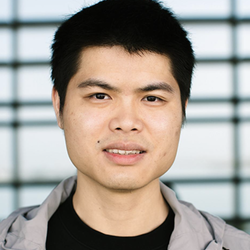
Guohao Li
Eigent.AI
Moderator
Zhijing Jin
University of Toronto
Eugene Vinitsky
New York University

Marc Lanctot
Google DeepMind

Bo An
Nanyang Technological University
TBD
Tentative Schedule
| Time | Session | Duration |
|---|---|---|
| 09:00 - 09:15 | Opening Remarks | 15 minutes |
| 09:15 - 09:55 | Invited Keynote 1 | 40 minutes |
| 09:55 - 10:35 | Invited Keynote 2 | 40 minutes |
| 10:35 - 10:55 | Break & Networking | 20 minutes |
| 10:55 - 11:25 | Oral Paper Presentation 1 | 15 x 2 minutes |
| 11:25 - 12:05 | Poster Session 1 | 40 minutes |
| 12:05 - 13:10 | Lunch & Networking | 65 minutes |
| 13:10 - 13:50 | Invited Keynote 3 | 40 minutes |
| 13:50 - 14:30 | Invited Keynote 4 | 40 minutes |
| 14:30 - 14:50 | Break & Networking | 20 minutes |
| 14:50 - 15:30 | Invited Keynote 5 | 40 minutes |
| 15:30 - 16:00 | Oral Paper Presentation 2 | 15 x 2 minutes |
| 16:00 - 16:40 | Poster Session 2 | 40 minutes |
| 16:40 - 17:30 | Panel Discussion | 50 minutes |
| 17:30 - 17:40 | Closing Remarks | 10 minutes |
Organizers

Jianhong Wang
University of Bristol

Caroline Wang
University of Texas at Austin, Google DeepMind

Feng Chen
Nanyang Technological University

Muhammad Arrasy Rahman
University of Texas at Austin
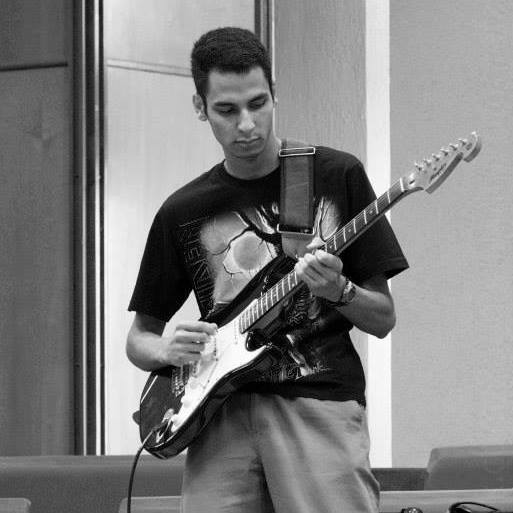
Felipe Leno da Silva
Lawrence Livermore National Laboratory

Rupali Bhati
Northeastern University

Bo Liu
National University of Singapore

Mustafa Mert Çelikok
University of Southern Denmark
Contact
For any inquiries, please contact iclr2026malgai@gmail.com. To catch up with us, please follow us on X.